Relocating to a new country is one of the most significant decisions a family can make. When children are involved, the decision carries even greater weight – because alongside the practicalities of visas, housing, and logistics sits one question that keeps most parents awake at night: what happens to my child’s education?
Antwerp is one of Europe’s most welcoming cities for international families. With a large and well-established expat community, excellent transport links, a thriving cultural scene, and a range of international schooling options, it is a city where families from around the world have settled successfully for decades. But navigating those schooling options – understanding what is available, how the Belgian system works, and which choice is right for your child – requires clear information before you arrive.
This guide covers everything an international family needs to know before, during, and after a move to Antwerp with school-age children.
Understanding the Education Landscape in Antwerp
Belgium has three distinct educational communities – Flemish, French, and German-speaking – and Antwerp falls within the Flemish community. State schools in Antwerp teach in Dutch, which creates an immediate barrier for families arriving without Flemish language skills.
For most international families, this makes state schooling impractical from day one. The alternative is an international school – and Antwerp has a number of options serving students from pre-school through to secondary level.
International schools in Antwerp teach in English and follow internationally recognised curricula – most commonly the International Baccalaureate, the British curriculum, or the American curriculum. These schools cater specifically to expat families and internationally mobile students, offering continuity of language, academic standards, and qualifications that travel with the child regardless of where the family goes next.
Choosing the Right School Before You Arrive
The most common mistake international families make when relocating to Antwerp is leaving the school decision until after they arrive. Good international schools in Antwerp often have waiting lists, and the enrolment process – including academic assessments, consultations, and paperwork – takes time.
The strongest approach is to begin researching schools at least three to six months before your planned move date. Key factors to evaluate include:
- Curriculum: Does the school follow a curriculum your child is already familiar with, or will they need to transition to a new academic system?
- Age range and grade placement: Does the school serve your child’s age group, and how does it handle grade placement for students joining from different systems?
- Language support: Does the school offer structured English as an Additional Language (EAL) support for students who are not native English speakers?
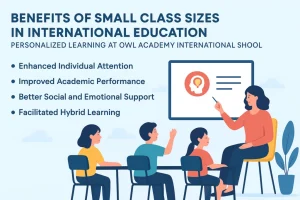
- Class sizes: Smaller classes generally mean more individual attention – particularly important for children adjusting to a new country and school environment.
- University preparation: If your child is secondary-age, which qualifications does the school offer, and how are those qualifications recognised internationally?
- Community: How welcoming is the school to new arrivals? Is there an active parent community that supports families settling in?
- Location: Is the school easily accessible from the area of Antwerp where you plan to live?
The British Curriculum – A Strong Foundation for Mobile Families
For internationally mobile families, the British curriculum offers one of the strongest foundations available – precisely because of its global reach and portability.
The IGCSE (International General Certificate of Secondary Education), examined through Pearson Edexcel and Oxford AQA, is recognised in over 160 countries. A-Levels, the advanced qualification taken at ages 16 to 18, are accepted by universities in the United Kingdom, the United States, Europe, Australia, and beyond. Students who follow the British curriculum in Antwerp carry qualifications that are understood and respected wherever they go next.
For younger students, the British curriculum’s structured approach to core subjects – English, Mathematics, Science – alongside foundation subjects including Geography, History, Computing, and the Arts, provides a broad and rigorous academic grounding that transitions smoothly with the student from country to country.
The American Curriculum – Flexibility for Diverse Learners
The American High School Diploma, with Advanced Placement (AP) courses, offers a different but equally valuable pathway for international families in Antwerp. Built on earned credits and continuous assessment rather than high-stakes final examinations, the American diploma suits students who learn better through ongoing evaluation and benefit from the flexibility to progress at their own pace.
The American High School Diploma is accepted by most universities worldwide – including institutions across the United States, Europe, and beyond. For families who may be heading to the US after Belgium, or who want maximum flexibility in their child’s future university options, the American pathway is a strong and well-established choice.
What to Expect in the First Few Weeks
The transition into a new school is rarely instant – even for confident, academically strong children. The first few weeks in a new school in a new country involve adjusting to new faces, new routines, a new physical environment, and often a new academic structure. This takes time, and parents who understand this from the outset are much better placed to support their child through the process.
Practical steps that help:
- Visit the school in person before your child’s first day, if at all possible, so the building and environment feel familiar.
- Speak to the admissions team about your child’s specific academic background so that teachers can prepare appropriately.
- Encourage your child to join at least one extracurricular activity early – sport, creative arts, or clubs are the fastest routes to new friendships.
- Be patient with academic adjustment – a student who was top of their class in their previous school may need time to find their footing in a new system.
- Stay in regular contact with teachers during the first term, not just at formal parent evenings.
Living in Antwerp as an International Family
Beyond the school, Antwerp itself is a city that international families tend to adapt to quickly. It is compact, walkable, and navigable by bicycle. The city has strong connections to Amsterdam, Brussels, and Paris by train, making it an excellent base for families who travel frequently. The international community is established and well-networked – there are active expat groups, international parent associations, and a social scene that makes it relatively straightforward to build a social life from scratch.
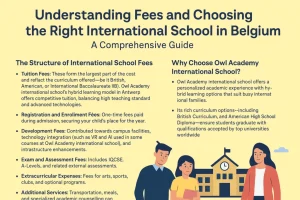
The cost of living in Antwerp is moderate by Western European standards. International school fees vary by institution, but most families relocating for professional reasons find that employer-supported education allowances cover a significant portion of the annual cost.
Final Thoughts
Moving to Antwerp with school-age children is very much achievable – and for many families, it becomes one of the most enriching experiences of their lives. The key is preparation: understanding your schooling options before you arrive, beginning the enrolment process early, and choosing a school that genuinely suits your child’s academic profile, learning style, and long-term educational goals.
With the right school behind them, children who relocate to Antwerp do not just cope – they thrive.