In a world shaped by globalization, digital transformation, and evolving career paths, the foundation of education has never been more important. A “good base” for international education today goes far beyond textbooks and exams; it is about building adaptable, confident, and globally aware learners who can thrive anywhere in the world.
So, what truly defines a strong foundation for international education in modern times?
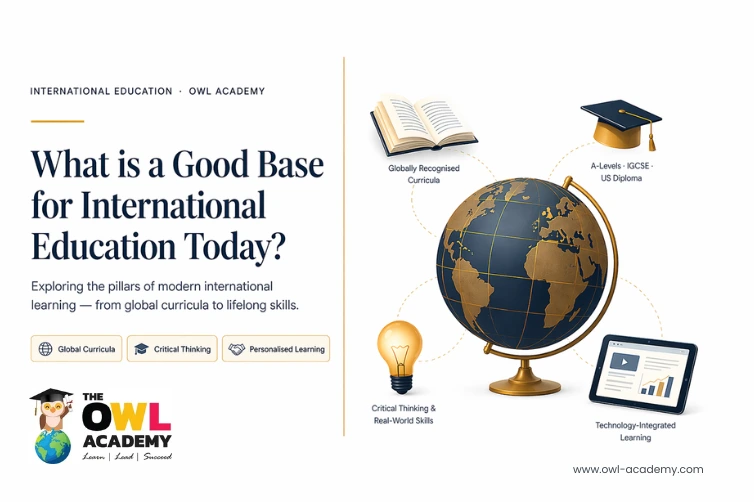
A Globally Recognised Curriculum
A solid base begins with internationally accepted academic pathways. Curricula such as the British and American systems provide students with qualifications that are recognised by universities and employers worldwide.
Programmes like IGCSE, A-Levels, and the American High School Diploma not only ensure academic credibility but also open doors to global higher education opportunities. This global recognition is crucial in a time when students increasingly pursue careers across borders.
Focus on Critical Thinking & Real-World Skills
Modern education is no longer about memorisation, it’s about thinking, analysing, and solving problems.
A strong international education base encourages:
- Critical thinking and independent learning
- Problem-solving through real-world scenarios
- Inquiry-based and hands-on learning
These skills prepare students for modern careers where adaptability and innovation are key.
Personalised & Flexible Learning Pathways
Every student learns differently, and a one-size-fits-all approach no longer works. A good foundation includes:
- Flexible subject choices aligned with interests and goals
- Self-paced learning opportunities
- Continuous assessments instead of one-time exams
This personalised approach helps students build confidence while progressing at their own pace an essential factor in long-term success.
Broad and Balanced Early Education
The foundation years play a critical role in shaping a student’s future. A strong international education system ensures exposure to a wide range of subjects such as:
- Core academics (English, Mathematics, Science)
- Creative disciplines (Art, Music, Design)
- Humanities (History, Geography)
- Technology and computing
- Physical education and well-being
This balanced approach nurtures not just academic growth, but also creativity, physical development, and global awareness.
Cultural Awareness & Global Perspective
International education must prepare students to live and work in a multicultural world. Learning foreign languages, understanding diverse cultures, and collaborating with peers from different backgrounds help students develop:
- Strong communication skills
- Cultural sensitivity
- A global mindset
These qualities are essential in today’s interconnected world.
Expert Educators & Support Systems
A strong academic base is built on high-quality teaching and guidance. The role of experienced educators and subject specialists is vital in delivering meaningful learning experiences.
Equally important is academic counselling and mentorship, which helps students:
- Track progress
- Make informed subject choices
- Plan future academic and career paths
Pathways to Higher Education & Career Success
A good base for international education should seamlessly lead to university and beyond. Advanced programmes like A-Levels and AP courses allow students to specialise deeply in subjects aligned with their future careers.
At the same time, broader programmes like the American High School Diploma ensure flexibility and holistic development, preparing students for diverse opportunities.
Inquiry-Based & Practical Learning Approach
One of the defining features of modern international education is its focus on experiential learning. Students don’t just learn concepts they apply them through:
- Science experiments and lab work
- Field studies and research projects
- Case studies and simulations
- Collaborative group activities
This approach bridges the gap between theory and practice, making learning more meaningful and impactful.
Integration of Technology in Education
Technology plays a crucial role in shaping a modern educational foundation. A strong international system integrates:
- Digital learning platforms and recorded lessons
- Interactive classrooms and virtual collaboration
- Access to global resources and research tools
Students become digitally fluent, which is essential in today’s tech-driven world.
Continuous Assessment & Progress Tracking
Unlike traditional systems that rely heavily on final exams, modern international education focuses on continuous and varied assessments, including:
- Coursework and assignments
- Presentations and projects
- Practical evaluations
This ensures a deeper understanding of subjects while reducing exam pressure and encouraging consistent improvement.
Supportive & Inclusive Learning Environment
A strong base is not just academicit is emotional and social too. A nurturing environment helps students:
- Build confidence and self-esteem
- Feel safe and supported
- Develop strong peer relationships
An inclusive, multicultural community encourages collaboration and prepares students for global citizenship.
Specialisation with Depth and Direction
As students progress, the ability to specialise becomes increasingly important. Programmes like A-Levels and Advanced Placement (AP) allow learners to:
- Focus on a smaller number of subjects
- Gain in-depth knowledge
- Align studies with university and career goals
This depth of learning prepares students for the academic rigor of higher education.
Building Lifelong Learners
Ultimately, the goal of a strong international education base is to create lifelong learnersindividuals who are curious, self-motivated, and eager to grow.
Such students:
- Adapt to change
- Embrace challenges with confidence
- Continue learning beyond the classroom
Final Thoughts
The future belongs to learners who are adaptable, curious, and globally minded. A strong international education foundation empowers students to explore their potential, embrace challenges, and succeed anywhere in the world.
In modern times, the best educational base is not defined by rigid systems, but by flexibility, global relevance, and student-centered learning. Itis about preparing young minds not just for exams but for a dynamic, interconnected, and opportunity-filled future.