
Choosing the right school is one of the most important decisions for an international family. When choosing an international school, parents need to look beyond the school’s location or reputation and consider whether its curriculum, teaching approach, fees and support systems are suitable for their child.
For families looking for an international school in Belgium, particularly around Antwerp, asking the right questions before applying can make the decision much easier.
Here are 10 important questions to ask when choosing an international school.
1. Which Curriculum Does the School Follow?
The first question should be about the curriculum.
International schools can follow different educational systems, including the British curriculum, American curriculum, International Baccalaureate (IB), or other national and international programmes.
Ask:
- Which curriculum does the school offer?
- What qualifications will my child receive?
- Is the qualification internationally recognised?
- What programme will my child progress to after completing the current stage?
For example, Owl Academy offers a British pathway from Elementary School through Middle School, IGCSE and A Levels, as well as an American High School Diploma pathway.
Understanding the complete pathway is important, particularly if your family may relocate again in the future.
2. Is the School Suitable for My Child’s Age and Grade?
Not every international school offers education for every age group.
Before applying, check whether the school has a programme that matches your child’s current grade and whether they can continue through the later stages of their education.
At Owl Academy, the British pathway includes:
- Elementary School: Grades 1–5
- Middle School: Grades 6–8
- IGCSE: Grades 9–10
- A Levels: Grades 11–12
The school also offers the American High School Diploma for Grades 9–12.
This type of continuous pathway can be useful for families planning their child’s education over several years.
3. What Language Is Used for Teaching?
Language is particularly important for families moving to Belgium with children.
Ask whether English is the primary language of instruction and whether additional languages are available.
You should also find out how the school supports students who are not native English speakers.
A suitable English-speaking school in Belgium should provide an environment where students can develop academic English while continuing to make progress in their other subjects.
Parents should consider not only the language used in classrooms but also communication between teachers, students and families.
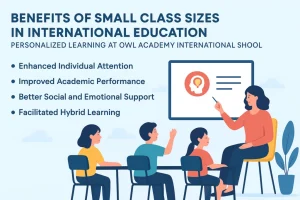
4. How Large Are the Classes?
Class size can influence how much individual attention a student receives.
When comparing international schools in Antwerp, ask:
- How many students are normally in each class?
- How many teachers work with students?
- Is individual academic support available?
- How does the school identify students who need additional help?
Smaller classes can make it easier for teachers to understand individual learning needs and provide personalised guidance.
Owl Academy places particular emphasis on small class sizes and personalised academic support.
5. How Does the School Support Students Moving From Another Country?
International families may move between countries several times during their children’s education.
Ask how the school handles students transferring from another educational system.
Important questions include:
- How are previous qualifications assessed?
- How is grade placement decided?
- Can students join during the academic year?
- Is academic counselling available?
- How are new students helped to settle in?
This is particularly relevant when looking for a school for expat children in Antwerp.
A good transition process can help reduce the academic and social challenges associated with moving to a new country.
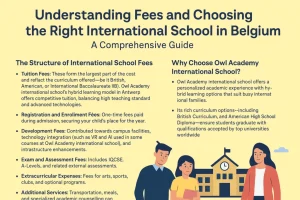
6. What Are the Total School Fees?
Tuition is an important part of choosing an international school, but parents should understand exactly what the published fee covers.
Ask for a complete fee structure and check whether there are additional charges for:
- Registration
- Examinations
- Learning materials
- School meals
- Transport
- Extracurricular activities
- Educational trips
For example, Owl Academy’s published 2026–27 annual tuition ranges from €10,500 for Elementary School to €18,500 for A Levels, depending on the programme. A €1,000 non-refundable registration fee per student also applies.
Parents should always confirm the latest fees directly with the school before making a decision.
7. How Does the School Prepare Students for University?
If your child is approaching secondary school, university preparation should be part of your decision.
Ask:
- Which universities do students typically progress to?
- Does the school provide university counselling?
- When does university planning begin?
- Does the school support applications?
- Are admissions tests and interviews discussed?
- Does the school help students select appropriate subjects?
For example, Owl Academy’s A Level programme includes university guidance covering areas such as UCAS applications, personal statements, admissions tests where required and interview preparation.
The important point is to make sure your child’s school qualification and subject choices align with their future university plans.
8. What Extracurricular Activities Are Available?
Education is not only about classroom learning.
When choosing an international school, ask about opportunities outside regular academic lessons.
These may include:
- Sports
- Music
- Art
- Drama
- Robotics and STEM
- Entrepreneurship
- Leadership activities
- Well-being programmes
Owl Academy offers extracurricular opportunities across areas including entrepreneurship and innovation, creative arts and performance, personal development and student well-being, and sports.
Parents should also ask whether activities are included in tuition or involve additional fees.
9. What Academic and Pastoral Support Is Available?
A child may perform well academically but still need support when adjusting to a new school or country.
Ask whether the school provides:
- Academic counselling
- Student well-being support
- Pastoral care
- Individual learning support
- University guidance
- Communication with parents
This is particularly important for internationally mobile students who may be adapting to a new environment.
A school that understands both academic and personal development can help students build confidence as well as achieve their educational goals.
10. Can We Visit the School Before Enrolling?
Finally, try to visit the school.
A website can provide useful information about curriculum, fees and facilities, but a school visit gives parents an opportunity to understand the learning environment.
During the visit, look at:
- Classrooms
- Learning spaces
- Student interaction
- Teaching environment
- Sports and activity facilities
- Overall atmosphere
Speak with the admissions team and ask questions about your child’s individual situation.
If possible, involve your child in the visit. Their reaction to the environment can provide valuable insight into whether the school feels right for them.
A Simple Checklist for Parents
Before making a final decision, compare each shortlisted international school in Antwerp using the following checklist:
| Question | What to Check |
| Curriculum | British, American, IB or another pathway |
| Grade | Suitable for your child’s age |
| Language | Main teaching language |
| Class size | Level of individual attention |
| Transfers | Support for international students |
| Fees | Tuition and additional costs |
| University | Guidance and future pathways |
| Activities | Sports, arts and enrichment |
| Student support | Academic and pastoral care |
| School visit | Campus and learning environment |
Why These Questions Matter
There is no single “best international school” for every family.
A school that is ideal for one student may not be the right choice for another. One child may benefit from the structure of the British curriculum and A Levels, while another may prefer an American pathway with continuous assessment and AP opportunities. Another family may specifically want an IB programme.
That is why choosing an international school should begin with your child’s needs.
Consider their:
Age + Previous Education + Learning Style + Academic Interests + Language + Future University Plans + Family’s Relocation Plans
These factors can help narrow down the choices.